
The Core Crisis Framework
Are You In Core Crisis?
Take 60 seconds to map your Stress Architecture — how your psoas, diaphragm, and scalenes are holding onto tension.
If you're catching yourself clenching your jaw on a random Tuesday, if your lower back locks up the second stress hits, or if you feel like you're working way too hard just to hold your body upright — you're likely in Core Crisis.
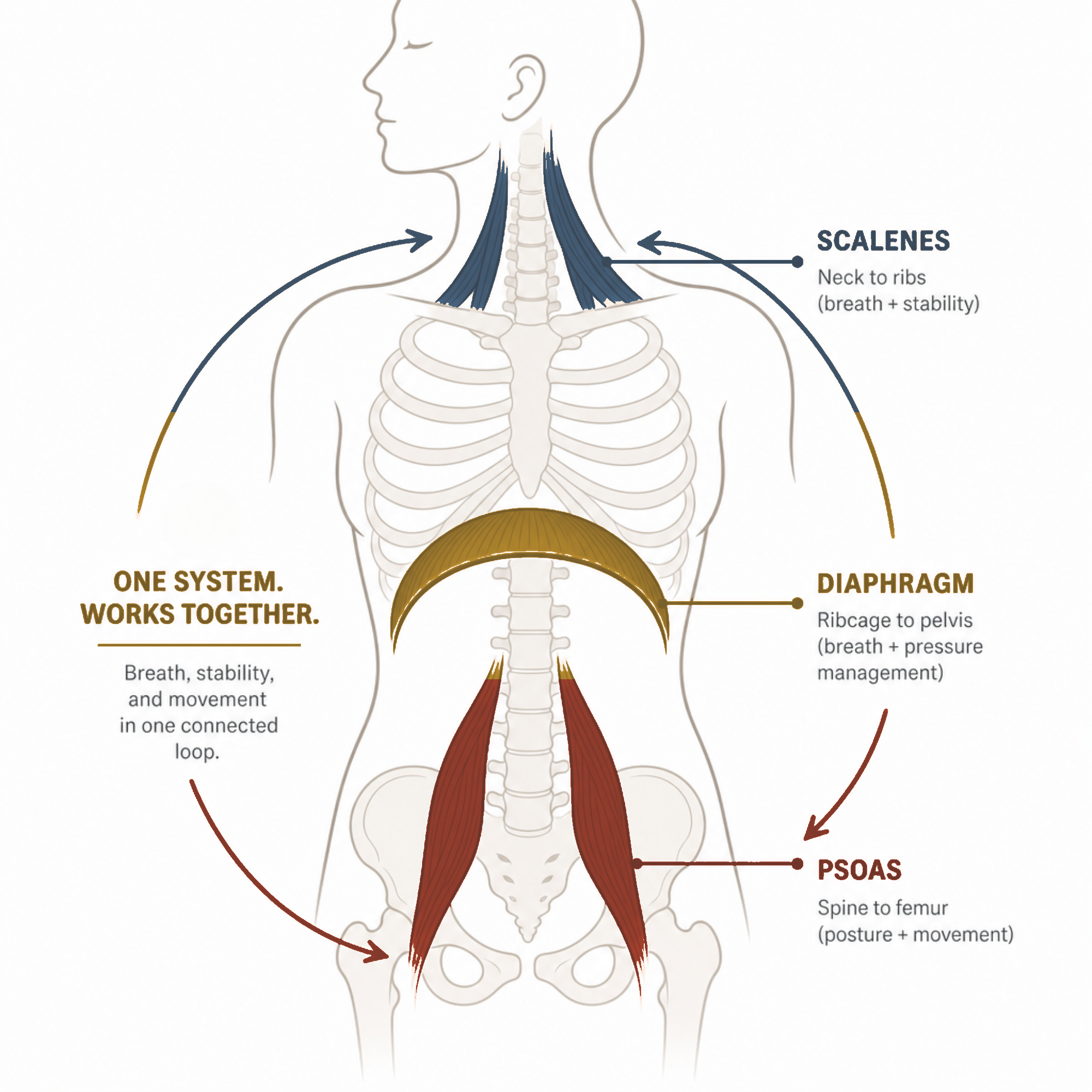
This isn't a medical disease. It's a highly coordinated design. Two ways to start mapping it, below.
Not sure where to start? Take the assessment first — it's 60 seconds, and it'll point you straight to the right practices in the guide.
Start Here — Option 1
Take the Assessment
Take 60 seconds to map exactly where your body has been holding the line — the deep brace, the restricted breath, the emergency response, or all three at once.
Prefer a printable version? Download the Survey + Key (PDF)
Start Here — Option 2
Get the Field Guide
Get the full mechanism — how the psoas, diaphragm, and scalenes lock into one continuous loop — plus twelve practices you can start using today.
What is Core Crisis?
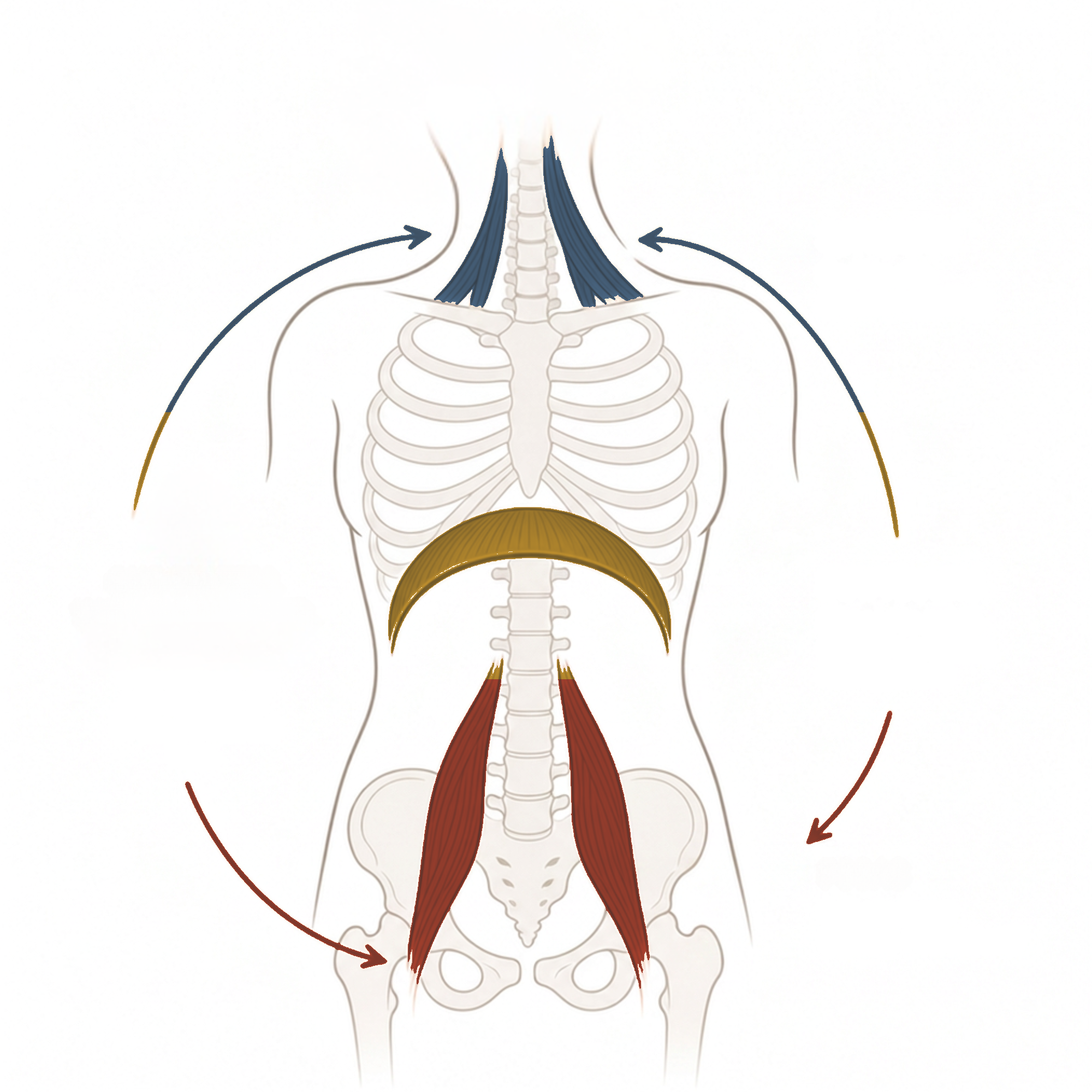
Your body has been trying to protect you. For a very long time. The lower back pain, the neck tightness, the shallow breath — these aren't separate problems. They're one system doing one thing: holding you in a state of readiness for a threat that hasn't passed yet.
The Psoas
Your oldest survival muscle. It braces and shortens before your thinking brain even registers stress.
The Diaphragm
The psoas meets your breathing system directly at your lower spine. When it's locked, the diaphragm can't fully descend.
The Scalenes
With the diaphragm restricted, these emergency neck muscles get recruited for every breath, compressing the nerve pathway to your arms and hands.
You cannot think your way out of this. Your body is physically keeping the emergency system turned on — which is exactly what the survey and the guide are built to help you interrupt.
One Layer Deeper
The Somatic Filter
Releasing the loop is the first step. Staying out of it is the next. The Somatic Filter is the practiced intentionality of living with boundaries, forethought, and care — the ongoing discernment that keeps the loop from re-arming once you've done the work of releasing it.
This is the work of the Long Exhale at TheSomaticArchitect.com — soundbaths, meditations, and a full exercise library, all built around training this one skill.